
Research Streams

Leadership Team:

  • Prof. Lyn March AM (Rheumatologist Arabanoo Precinct)
  • Dr Davinder Grewal-Singh (Paediatric Rheumatologist, Sydney Children’s Network)
  • Dr Premarani Sinnathurai (Rheumatologist Arabanoo Precinct)
  • A/Prof. Meilang Xue (Head of Sutton Rheumatism Research Laboratory, Kolling and A3BC Headquarters)
  • A/Prof. Sean O’Neill (Rheumatologist Arabanoo Precinct)
  • Prof. Peter Youssef (Rheumatologist Patyegarang Precinct)
  • Dr Bethan Richards (Rheumatologist Patyegarang Precinct)
  • Prof. Mandana Nikpour (Director Sydney MSK, Rheumatologist Patyegarang Precinct)

Objectives:

Our overarching aim is provide optimal care and outcomes for children and adults living with inflammatory and autoimmune conditions by identifying early predictors of disease severity, biomarkers for response to treatments and prediction algorithms for drug free disease remission through multi-omic analyses of patient data and biospecimen collection embedded in routine care.
This network is built around A3BC – the Australian Arthritis and Autoimmune conditions Biobank Collaborative – that has its lead site at Kolling Institute as an integral part of Kolling MSK Priority Research Area and Sydney Musculoskeletal Research Centre Data and Discovery Pillar. Through A3BC this CAG currently collaborates across the Sydney Health Partners (NSLHD, SLHD, WSLHD), the NSW State Wide Biobank and across other recognised Health Research Translation Centres Maridulu Budyari Gumal (SPHERE) and UQ, ANU, UNSW, Melbourne Uni, Monash Uni, Flinders Uni, South Australian Uni, UWA. A3BC was founded through philanthropy, has ongoing infrastructure funding from philanthropy, the NSW Health OHMR and underpins the 3 successful category one grants, along with two UQ collaborations that harness the A3BC infrastructure and output MRFF NINA for federated learning data linkage model and MRFF for Lifestyle Interventions to Reset Early RA.

Projects:

NHMRC Centre for Research Excellence: Better Outcomes for Inflammatory Arthritis

  • Risk factor analysis and Lifestyle interventions in pre-RA
  • Evaluating predictors of therapy response in early inflammatory undifferentiated arthritis, RA, PsA, AS
  • Australian Juvenile Arthritis Registry
  • A3BC and ARAD data-linkage analyses
    • Predicting inflammatory arthritis outcomes using integrated models of diverse data towards personalised medicine (PhD – Tom Lynch)
    • Medication use and management of reproductive-aged women with rheumatic disease (PhD – Dr Abhishikta Dey)
    • Improving Outcomes in Juvenile-onset Rheumatic Disease (PhD – Dr Mariya Hamid)
  • Predictors of response in Synovial Tissue analysis
  • Activated Protein-C as potential treatment target in inflammatory and autoimmune disease – RA, PsA and SLE
  • Impact of microbiome in response to treatment and disease course
  • Shared Decision Making and Patient Outcomes

MRFF Effective Use of Existing Medicines

  • PROSPECT study – Randomised Biologic Tapering Trial in adults with Rheumatoid and Psoriatic Arthritis.
  • Multi-omic analyses and predictor algorithms
  • SWAT Shared Decision-Making analysis (MPhil – Dr Frank Huang) – This sub study of the PROSPECT trial explores how patient decision aids can support shared decision‑making (SDM) when people with rheumatoid or psoriatic arthritis are considering tapering of their disease modifying antirheumatic drugs (DMARDs). The study measures how decision aids influence decision quality, decisional conflict, regret, and both patient‑ and clinician‑reported SDM. Additional qualitative interviews with patients and clinicians will provide insights into the usefulness and optimisation of decision aids. Findings will help refine tools and guide future SDM implementation in clinical practice.
  • The ICONIC-PsA 2 research study is evaluating an oral investigational medication for adults who have taken a biologic medication for active psoriatic arthritis (PsA). For more information, please see link: https://arthritisaustralia.com.au/wordpress/wp-content/uploads/2025/07/Information-Sheet-1.pdf

MRFF Better Outcomes for Chronic MSK conditions in Childhood and Adolescents – A3BC for Kids

  • CHAMPION study – Randomised Biologic Tapering Trial in children and young adults with Juvenile Arthritis.
  • Australian Juvenile Arthritis Registry (AJAR) – The Australian Juvenile Arthritis Registry (AJAR) collects vital information on children and young people living with juvenile arthritis and related autoimmune and musculoskeletal conditions across Australia. Established through a partnership between the Juvenile Arthritis Foundation Australian (JAFA), the Australian Paediatric Rheumatology Group (APRG) and the Australian Arthritis and Autoimmune Biobank Collaborative (A3BC), the registry aims to improve understanding of disease prevalence and support advocacy for better care, services, and research. Participation is voluntary and includes the option to be contacted for annual surveys and future studies. Open to individuals under 25 with a juvenile rheumatic disease, AJAR plays a key role in advancing research and outcomes for young Australians.
  • A3BC biospecimen sub-study – CAG members are currently researching rheumatoid arthritis, psoriatic arthritis, ankylosing spondylitis, systemic lupus erythematosus, scleroderma, inflammatory myositis, vasculitis, giant cell arteritis, and paediatric conditions including juvenile idiopathic arthritis, uveitis, dermatomyositis, lupus, Kawasaki’s disease. Find out more

Patients, families and researchers interested in collaborating in any of these research projects or others that could harness our combined clinical, patient report, biospecimens and PBS, MBS data-linkage should contact us at info@a3bc.org.au

Leadership Team:

  • Dr Jillian Eyles (NHMRC Emerging Leadership Fellow, physiotherapist, CAG Co-chair)
  • Prof. David Hunter (Rheumatologist, RNSH)
  • Prof. Andreas Zankl (Clinical Geneticist, Children’s Hospital Westmead)
  • A/Prof. Michelle Hall
  • Dr Jocelyn Bowden
  • Dr Vicky Duong
  • Dr Sarah Kobayashi

Objectives:

This Network is formed around several implementation trials and other initiatives designed to improve the management of osteoarthritis and young people with skeletal dysplasia. This stream cuts across the SHP LHD catchment, other NSW LHDs, partners with the Agency for Clinical Innovation, and consumers.

Projects:

  • ASSESSING A MULTICOMPONENT STRATEGY DESIGNED TO REDUCE LOW-VALUE CARE FOR KNEE OSTEOARTHRITIS – This implementation trial will test a strategy to support health professionals to reduce the use of less helpful treatments and offer better options for knee OA.
  • SLEEP MSK – This adaptive basket trial aims to determine whether adding CBT-I to usual physiotherapy-led care improves pain and/or insomnia more than usual care alone at six months in people with hip/knee OA and low back pain.
  • TOPS – Is assessing the efficacy of an exercise and weight management program in the prevention of knee OA in women >50 years who are at risk developing the condition. - Find out more
  • COASTAL – Compares the effectiveness of three methods of osteoarthritis management program delivery: in-person, telehealth and an MHealth application. – Find out more
  • CASCADE – Aims to determine if a US walking program for people with knee OA (Walk with Ease)adapted for the Australian context improves physical activity –  Find out more
  • ATLAS study – The Arthritis Training Learning and Upskilling is an eLearning program for health professionals. We are assessing if ATLAS improves confidence in knowledge and skills of health professionals in arthritis care.
  • Skeletal Dysplasia Studies 

Leadership Team:

  • Prof. Anne Tiedemann (Exercise scientist, NHMRC grant CIA)
  • Prof. Leanne Hassett (Physiotherapist, MRFF grant CIA)
  • Prof. Paulo Ferreira
  • Dr Kate Roberts (Physiotherapist, clinical trial coordinator)
  • James Zouch (Physiotherapist, clinical trial coordinator)
  • Dr Marina Pinheiro (implementation fellow)
  • Dr Louise Pearce (postdoctoral fellow)

Objectives:

This Network is built around multiple collaborative implementation projects that focus on supporting pathways to community exercise from health services with SHP.

Projects:

  • BEHAVIOUR –  Find out more
  • PROMOTE-PA – Supporting health professionals to promote physical activity in clinical practice –  Find out more
  • PhysioDirect – Direct access to private physiotherapy services for musculoskeletal pain.
  • BRIDGES – physical activity for people after traumatic brain injury (TBI) –  Find out more
  • CONNECT TO MOVE – Co-designing a physical activity navigator program for adults with intellectual disability –  Find out more

Leadership Team:

  • A/Prof. Gustavo Machado (Physiotherapist, NHMRC EL2 Investigator, USYD Robinson Fellow, Institute for Musculoskeletal Health)
  • Prof. Chris Maher (Director, Institute for Musculoskeletal Health)
  • Dr Bethan Richards (Rheumatologist, RPAH)
  • A/Prof. Michael Dinh (Emergency Physician, RPAH)
  • Dr Simon Vella (Chiropractor, Postdoctoral Fellow, Institute for Musculoskeletal Health)
  • Dr Crystian Bitencourt Oliveira (Postdoctoral Fellow, Institute for Musculoskeletal Health)
  • Prof Steven Kamper (Professor of Allied Health, University of Sydney & Nepean Blue Mountains Local Health District)
  • Dr Tie Yamato (Senior Research Fellow, School of Health Sciences)

Objectives:

This stream is built around the implementation of new models of care and evaluation of existing health services for people with low back pain and other musculoskeletal conditions within SHP LHD catchment, other NSW LHDs, partners with the Agency for Clinical Innovation, and consumers.

Projects:

  • RESHAP-ED – a randomised trial testing primary-contact physiotherapy in emergency departments. Funded by MRFF.
  • BACK@HOME – an implementation study of a virtual hospital model of care for low back pain. Funded by HCF Research Foundation.
  • LINK-ED – a health-record data linkage study that aims to develop a single platform to integrate prehospital and hospital datasets on low back pain. Funded by The University of Sydney
  • The HelpLine Project – An implementation trial of a free national Helpline designed to assist people in the community to self-manage their LBP. Find out more
  • RAMBO – A randomised trial to implement and evaluate a virtual care referral pathway for ambulance service to manage people with back pain. Funded by HCF Research Foundation.
  • SMART-ED Trial – A clustered sequential multiple assignment randomised trial to evaluate several implementation strategies of back pain guidelines on opioid prescribing in the emergency department. Funded by MRFF
  • SONIC – A randomised trial to evaluate the use of sling immobilisation versus no sling for the management of patients presenting to the emergency department with a first-time anterior shoulder dislocation. Funded by NHMRC IG
  • PAIN SMART – Integrating pain education and clinical care for adolescents with pain at schools – A combined cluster randomized controlled trial and individually-randomized controlled trial with embedded clinimetric study to estimate the effectiveness of a school-based pain education program in improving adolescents’ understanding of pain, and estimate the effectiveness of biopsychosocial individual support in addition to school-based pain education in reducing pain interference for adolescents reporting problems with pain.

Leadership Team:

  • A/Prof. Christina Abdelshaheed (Pharmacist, NHMRC grant CIA, CAG Co-chair)
  • Prof. Andrew McLachlan (Dean of Pharmacy)
  • Prof. Chris Lin (NHMRC Investigator Grant holder)
  • A/Prof. Danijela Gnjidic (NHMRC Dementia Leadership Fellow)
  • Dr Giovanni Ferreira (NHMRC Investigator Grant Holder)
  • Dr Aili Langford (Pharmacist, NHMRC Investigator Grant Holder)

Objectives:

This network is built around de-prescribing of opioids and other potentially high-risk medicines, promoting the judicious use of medicines for musculoskeletal pain and work involving guideline implementation and NHMRC-funded trials, such as Prof Lin’s NHMRC-funded OASIS trial (Oral Steroids for Sciatica).

Projects:

  • COMFORT - Clinical Observation Management and Function of Low Back Pain Relief Therapies – Aims to support general practitioners to provide opioid stewardship for patients with low back pain. -  Find out more
  • The Pain Medicines Roadmap – A global initiative that brings together the evidence regarding the efficacy and harms of opioids, gabapentinoids, antidepressants, muscle relaxants, anaesthetics, glucocorticoids, non-steroidal anti-inflammatory drugs, paracetamol and complementary alternative medicines for the treatment of cancer and non-cancer pain in people of all ages.
  • I-WOTCH-AU – Improving the Wellbeing of people with Opioid Treated Chronic Pain in Australia (I-WOTCH-AU) is an MRFF-funded trial designed to assess the effectiveness of a multidisciplinary model of care for Australians living with chronic non-cancer pain, taking long-term opioid analgesics.
  • DREAM – The Duloxetine for chronic sciatica (DREAM) Trial is an NHMRC-funded trial investigating the efficacy and safety of duloxetine (an antidepressant) for people with chronic sciatica. DREAM is the largest investigator-initiated trial of duloxetine for chronic musculoskeletal pain (n = 332). Find out more
  • OASIS – Oral steroids (prednisolone) for acute sciatica: Find out more

Leadership Team:

  • Prof. Cathie Sherrington
  • Prof. Vasi Naganathan
  • Prof. Ian Cameron (Rehabilitation Physician, Hornsby Hospital)
  • Dr Venisa Kwok
  • A/Prof Mark Latt
  • Dr Marina Pinheiro
  • Dr Rik Dawson

Objectives:

This Network is based various collaborative studies aimed at improving the care of older adults in hospital and aged care settings including the FORTRESS project aiming to reduce frailty and disability, the TOP-UP project of telehealth physiotherapy exercises, the PROTECT fall prevention study and initiatives to understand and prevent emergency department presentations for falls. This network builds on previous large-scale health service trials looking at falls and frailty, NSW Health Leading Better Value Care initiatives and a CRE in the prevention of falls injuries.

Projects:

  • FORTRESS Plus – This study provides an enhanced intervention after discharge in comparison with the previous study.
  • TOP-UP – The Aged Care facilities study (TOP-UP) investigating telehealth for exercise. - Find out more
  • EHITH – Evaluation of Emergency Hospital in the Home Model of Care – Find out more
  • PROTECT Falls – Supporting staff to prevent falls in hospitals - Find out more
  • SURESTEP – Improving mobility in hospitals – Find out more

Leadership Team:

  • Dr Giovanni Ferreira
  • Prof. Ian Harris (Orthopaedic surgeon, SWSLHD, SLHD)
  • Prof. Chris Maher
  • Dr Caitlin Jones
  • Dr Sam Adie
  • Dr Verinder Sidhu

Objectives:

This Network builds on the world leading NHMRC-funded surgical research undertaken by the team and links with CREs in Right Care, Back Pain and Musculoskeletal Trials.

Projects:

  • EPIK – This trial will investigate the effectiveness, cost-effectiveness, and safety of a model of care to manage patients with persistent pain after total knee replacement (TKR). We propose a new model of care (EPIK) to address this unmet need. EPIK combines i) routinely collected data from a national joint registry which will act as a ‘safety net’ for patients with persistent pain following TKR; and ii) early assessment and care coordination by a physiotherapist to ensure patients get the right care at the right time – Find out more
  • REPAIRS – This trial investigated whether a randomised controlled trial testing lower amounts of opioids dispensed at discharge after total hip and knee replacement can provide non-inferior pain relief to standard care
  • Short Stay Discharge Program – This trial is investigating whether a short stay discharge program, which includes going home within ~ 24 hours of surgery and receiving virtual care at home, is satisfactory to participants and leads to positive clinical and service level outcomes.

Other Initiatives

Register to find expertise or support aligned to your research interests.

Our database of existing research projects and project ideas is designed to help match RACP Advanced Trainees, Basic Physician Trainees or other interested Clinicians with our network of Early to Mid Career Researchers to provide mentoring or research project support.

Join the Musculoskeletal CAG

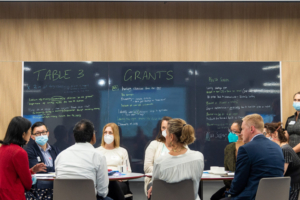
Be part of a collaborative network driving research that makes a real difference to musculoskeletal health.

We welcome clinicians, researchers, policy-makers, and consumer advocates with an interest in improving musculoskeletal health. Whether you’re early in your career or an established leader, your voice adds value.
Why join

  • Collaborate on high-impact, translational research
  • Access mentoring, training, and funding opportunities
  • Influence research priorities and co-design meaningful studies
  • Contribute to better outcomes through evidence-informed policy and practice

Research Translation Project Receives $4.8 million to Tackle Opioid Overuse in EDs

The SMART-ED trial, which will involve up to 44 emergency departments and 8,800 patients across New South Wales, will test optimal implementation strategies…

Clinical Academic Group Launch Sparks Collaboration Across SHP

Clinicians and researchers from across Sydney have come together to launch Sydney Health Partners’ new Clinical Academic Group (CAG) program. An inaugural workshop…

Clinical Academic Group Collaboration Leads to $3 million Grant

Members of Sydney Health Partners’ Geriatric Medicine CAG have been awarded $3 million in funding for a new clinical implementation study, which will…

Events and Training

View All Events

Resources

Webinars

If you’d like to join the Musculoskeletal Clinical Academic Group

arthritis