
SHP Roadshow Wraps Up
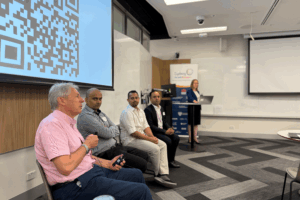
Sydney Health Partners’ 2025 roadshow, Translation in Action, has ended on a high note with a final stop at Westmead Hospital.


The event, which was jointly presented with Western Sydney Local Health District’s (WSLHD) Research and Education Network (REN), highlighted local examples of the Partnership’s activities and how they are supporting research translation across the District.
Senior Emergency Department Occupational Therapist at Blacktown and Mt Druitt hospitals, Frank Gomes, presented his SHP-funded pilot project, which is testing the implementation of a new way of screening the functional cognition of older adults who present to emergency departments.
Mr Gomes said he’d learnt that successful research translation required a high level of stakeholder engagement.
“When planning your research translation project you should ask, what appetite is there for the proposed intervention?” he said. “How likely is it to be picked up by clinicians, because without their support it is very difficult.”

The combined SHP-REN event was designed for all staff at WSLHD who are involved in – or simply interested in -research translation and embedding research into clinical practice.
The Co-chair of the Reproductive, Maternal and Newborn Health Clinical Academic Group (CAG), Professor Dharmintra Pasupathy, told the audience that clinicians interested in becoming involved in research should go into it with “an agility of mind.”
“You must have your research question, but often during conversations the question gets refined and aligned to health priorities of the hospital,” he said.
During a discussion panel, the Executive Director of Sydney Health Partners, Professor Don Nutbeam, said SHP encourages research that aligns for the needs of the health system.
“During the year we have heard from the Chief Executives of the Local Health Districts about what is important to them. The question is how we can best fit our passion for innovation into the broader context of our health system?
He said SHP had invested in implementation science because of the complexity of undertaking change with the health system.
“If it was easy, it wouldn’t take 17 years,” he said. “It requires skills we haven’t had training in and an appreciation of multiple perspectives.
“We have to engage in a much more agile discussion about how and why change occurs.”