


Funding
Assessing the Risk of Harm for Alzheimer’s Patients After ED Discharge
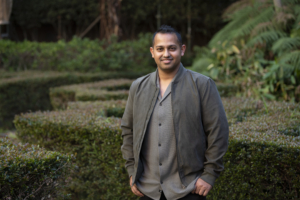
With support from a 2026 Sydney Health Partners Clinical Research Fellowship, occupational therapist Francis Gomes is seeking to improve emergency department (ED) discharge assessments for patients with Alzheimer’s disease.
Published date:
In hospital EDs, occupational therapists are often called to determine when, and whether, older patients can be sent home safely. This decision becomes more complex for people with Alzheimer’s disease who often struggle to understand and articulate their support needs.
Francis Gomes, an occupational therapist in Blacktown Hospital’s ED, is seeking to meet this challenge, supported by a 2026 Sydney Health Partners Clinical Research Fellowship. Over the next two years, he and his colleagues will trial practical activity screening tools that will help measure the risk of adverse events (such as unplanned readmission, falls, injuries and functional decline) after ED discharge among patients with Alzheimer’s disease.
The team will explore the feasibility of the tools among clinicians and patients, as well as their impacts on the patient experience.
“In the ED, we don’t have any validated tools that look at the functional implication of Alzheimer’s disease or cognitive impairment as it relates to living at home,” Francis says.
“I’m hoping to test these practical, performance-based tools and compare them against our traditional tool that we use in the ED to see which one gives us more information about patients’ post-discharge capacity.”
Assessing Functional Cognition
People with Alzheimer’s disease often struggle with episodic memory, but many retain procedural memories and the physical, cognitive and processing capabilities to perform a range of everyday activities. The integration of these capabilities is known as functional cognition.
Unlike the ED’s existing tools, which assess things like mobility, vital signs and mental status, the practical activity tools will investigate patients’ functional cognition based on their global ability to complete either a simple medication or weaving task.
By measuring the same skills required to fulfil many of the tasks of daily living, these tools will reveal important information about how well patients can function in their home environments.
“Our hope is that these tools will give us a more complete picture of a person’s physical ability as well as their cognitive ability and how they respond to a task most people are familiar with,” Francis says.
The outcomes will help clinical staff better stratify patients by their risk of harm, thereby identifying those who are safe to go home, those who require further hospitalisation, and those who fall somewhere in between. In turn, this will help patients and families plan their future care and reduce repeat presentations to ED.
Building Clinical Research Capacity
Sydney Health Partners’ Clinical Research Fellowships support early career clinicians to pursue translational clinical or health services research that improves health care delivery. The 2026 scheme has been made possible by support from Equity Trustees, a major Australian independent trustee and executor company, that also supports health and medical research. This year’s Fellowships have a particular focus on supporting research into Alzheimer’s disease and motor neurone disease.
As one of two fellowships, Francis will receive $160,000 over two years supported by The Mason Foundation as managed by Equity Trustees. This funding covers protected research time, a professional development budget, opportunities to engage with academic and clinical networks, and access to Sydney Health Partners’ implementation science and consumer partnerships training and resources.
The Fellowship will give me a dedicated three days a week to do data collection, write publications and make sure we’re progressing the research forward. That’s what’s really going to make a huge difference.
Francis Gomes
“I’m also planning to use the professional development funding to build some critical skills in statistics and qualitative research methods.”
Francis previously received a 2025 Sydney Health Partners’ Implementation Science Pilot Grant. This grant helped him build fundamental clinical research skills and an understanding of implementation science that will support his Fellowship work.